

26 May 2026: 2024 Ramsay Postgraduate Scholar Dr William Waldock is a doctor and clinical researcher determined to help Australia lead the global response to antimicrobial resistance. With his Postgraduate Scholarship, he is now twenty months into a PhD in Clinical Research at Imperial College London’s Institute of Global Health Innovation (IGHI) and the new Fleming Initiative, where he is developing AI-driven clinical decision support systems to improve how hospitals prescribe antibiotics, and where he is developing STEWARD-AI as a framework for commissioning AI for antimicrobial stewardship.
Originally educated at the University of Cambridge, where he completed his medical degree and was awarded seven academic prizes during the course, William worked clinically across the UK before turning to research. His path into antimicrobial resistance was shaped by formative time at Alice Springs Hospital Emergency Department, where the inequalities faced by First Nations Australians left, in his words, “an indelible impression on my conscience”. He has previously contributed to research at the UK Medical Research Council (MRC) Laboratory of Molecular Biology and the MRC Cancer Unit in Cambridge. He has also co-authored The Lancet Commission on Global Eye Health.
Now based at Imperial, William’s doctorate is supervised by Professor Lord Darzi of Denham, with Professor Bryony Dean Franklin as co-supervisor, and builds on the foundational EPIC IMPOC work of Professor Timothy Rawson at Imperial’s Centre for Bio-inspired Technology. His thesis is structured around seven empirical studies that ask, in essence: can artificial intelligence be operationalised safely inside a hospital to enable antibiotics to work as efficaciously as possible? Four of those studies have already been published in Nature npj Antimicrobial Resistance, with further papers progressing through peer review. He passed his Early-Stage Assessment in July 2025, his Late-Stage Assessment in April 2026, and is on track to submit in 2027.
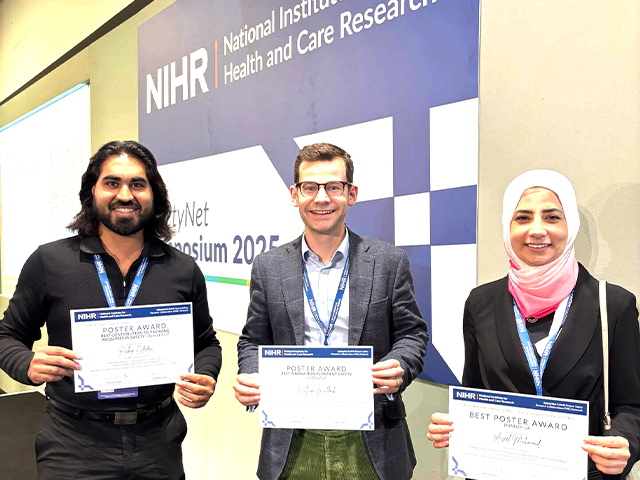

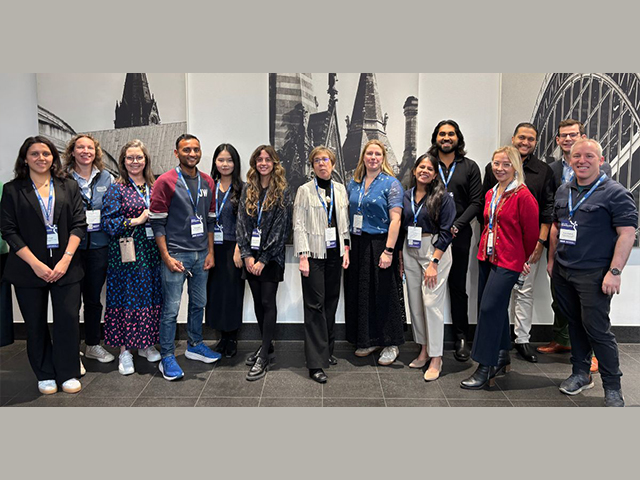
Reflecting on the Ramsay scholarship, William says it has given him the space and the network to pursue what he calls “an unreasonably interdisciplinary” doctorate, as one that demands fluency across clinical medicine, machine learning, implementation science, and health policy. Highlights so far have included receiving the Runner Up Poster Award for Best Innovation in Patient Safety at the NIHR Safety Net Conference in Manchester (October 2025), leading the Imperial THINK for Academia Dinner in November 2025, and contributing substantively to the 2025 Institute of Global Health Innovation Review and Health Data Research Service (HDRS) policy white papers.
In his own words:
The Ramsay Postgraduate Scholarship has given me permission to take a problem seriously. Antimicrobial resistance (AMR) is sometimes called the “silent pandemic”: the projections suggest ten million deaths a year globally by 2050, with a cumulative economic cost to Western health systems running into the tens of trillions of dollars. It is the kind of problem that needs considered, careful, interdisciplinary work, and careful, interdisciplinary work is exactly what a fully-funded doctorate makes possible. I applied because the Ramsay Centre takes scholarship in service seriously. That sense of obligation, paired with the confidence of genuine intellectual independence, is exactly the framework in which I wanted to do this work. A highlight has come from the cohort itself. Meeting the other Scholars at the 2026 Berlin Conference helped me understand that I was joining a long conversation rather than starting a project in isolation.
My PhD focuses on operationalising AI inside hospitals to improve antimicrobial prescribing. The thesis is built around seven studies. The first is a systematic review identifying where existing AI tools fail to support real clinical workflows. The second, MARISA, uses a modified James Lind Alliance method to surface where leading AMR clinicians and researchers think the field’s research priorities actually lie. The third is a mixed-methods evaluation of an antimicrobial prescribing app already in use across an NHS Trust, which surfaced the “invisible” organisational friction that makes even accurate tools fail in practice. The fourth refines the tool through risk-sensitive co-design with frontline clinicians. The fifth is the development, through an international eDelphi process, of an “AMR Burden Score”: a standardised metric to measure stewardship effectiveness that, until now, the field has lacked. The sixth is a tripartite pilot of a new language model for antimicrobial prescribing which uses Retrieval-Augmented Generation, and the seventh translates the whole programme into an internationally validated commissioning framework (STEWARD-AI). You can read more here: https://blogs.imperial.ac.uk/ighi/2026/04/15/understanding-antimicrobial-resistance-from-measurement-to-better-decision-making/
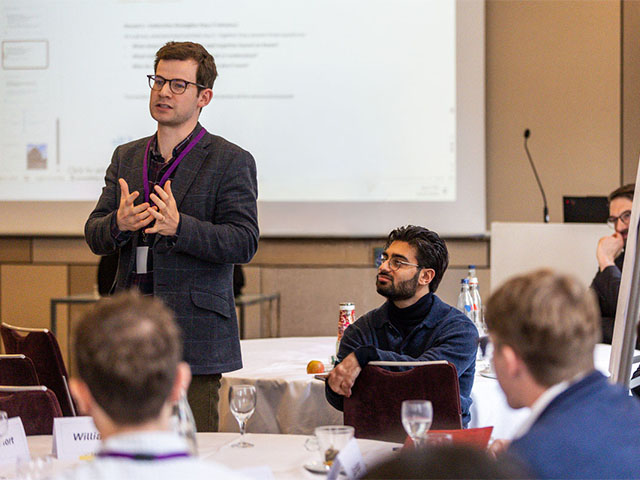
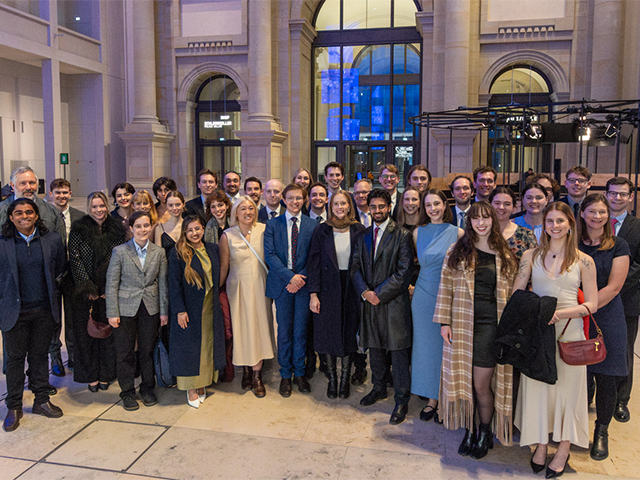
My academic highlight has been my supervision team. Professor Lord Darzi, as my senior supervisor, has set the strategic frame for the work and modelled what it means to operate at the intersection of medicine, policy and public life. Professor Bryony Dean Franklin, one of the world’s leading researchers in medication safety, has been an extraordinary co-supervisor on the methodology and clinical safety side. I have also had the great fortune of mentorship under Professor Hutan Ashrafian, whose collaboration with Flagship Pioneering has opened doors into how biotech and clinical research actually meet. Imperial’s Graduate School training has been substantial (Python, machine learning, deep learning, public engagement) and the Fleming Initiative provides a genuinely interdisciplinary home, where infectious diseases, microbiology, health informatics and economics sit at the same table. The work of generating consensus through the eDelphi process, in particular, taught me that real research at this intersection is as much about facilitation as it is about analysis.
It has been particularly meaningful, as an Australian, to do this work at the Fleming Initiative, an institute whose partnership with the CSIRO sits in the direct lineage of Howard Florey, the Australian scientist who turned Alexander Fleming’s penicillin discovery into the mass-produced medicine that defined twentieth-century clinical care. The CSIRO–Fleming AMR 2026 Summit, co-hosted in Sydney from 18 to 20 February this year, was a reminder that the country has a serious continuing role to play in this fight, and that Australia’s scientific heritage in antimicrobials is not something I am watching from afar.
What’s next? This year the focus is the final empirical work of the thesis on the STEWARD-AI commissioning framework that translates everything I have learned into something a healthcare system can actually use to govern AI for antimicrobial stewardship. After submission in 2027, I hope to apply my training as a pharmaceutical physician in private-market life sciences investment, and I am particularly fortunate to be joining Flagship Pioneering as a Fellow this year, a firm whose work at the intersection of science and capital has shaped how I think about translation. My longer-term hope is that this experience contributes meaningfully to Australia’s biotech-investment and translational capability, helping the country turn its scientific strength into clinical and economic sovereignty, work that can be advanced from many vantage points in a globally distributed industry.
Antimicrobial prescribing matters because people matter. If we are wasteful with scarce resources, we are being wasteful with each other’s lives. Artificial intelligence will never deliver a utopia, but it may help postpone death, and appropriate prescribing may therefore give a loved one a little more time for what matters. The Ramsay Centre has given me the chance to spend three years working seriously on exactly that.
Interested in a Ramsay Postgraduate Scholarship? Our scholarships support young Australian leaders to study at the world’s best overseas universities and are valued at up to AUD$100,000 p.a. For more information visit: https://ramsaypostgradscholarship.com/
Media contact: Sarah Switzer 0407 816 098 / sarah.switzer@ramsaycentre.org