

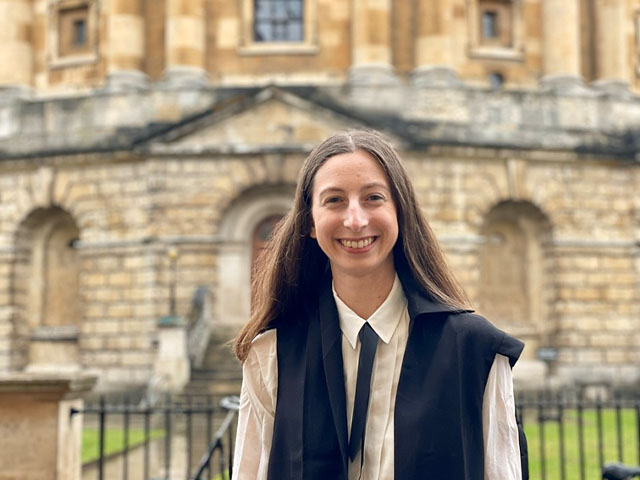
Friday 09 January 2026: 2022 Ramsay Postgraduate Scholar Dr Grace Borchert is an aspiring ophthalmologist in her final year of a DPhil in Clinical Neuroscience at the University of Oxford.
Prior to her scholarship she worked as a junior doctor at Princess Alexandria Hospital in Brisbane while completing a Master of Medicine (Ophthalmic Science) from the University of Sydney. She also holds a Doctor of Medicine, Bachelor of Medical Science and Bachelor of Biomedical Science (First Class) with the University Medal from Queensland’s Griffith University.
Inspired by the late Fred Hollows’ humanitarian work restoring eyesight in vulnerable communities, Grace has undertaken placements with Lions Outback Vision, the Royal Flying Doctors Service, the Royal Victorian Eye and Ear Hospital, Lions Eye Institute and Moorfields Eye Hospital. She previously served as Executive Director of the not-for-profit initiative ‘Ubuntu Through Health’ which supports health projects in developing countries.
At Oxford, Grace is researching gene therapy for age-related macular degeneration, the leading cause of visual impairment in ageing populations. Her research has been acknowledged internationally through publications and prestigious conferences. Outside of the lab she is an avid rower for her College team, which in 2023 took first place in the open category at the Bedford Regatta, one of the largest single-day river regattas in the UK.
Reflecting on her Scholarship, Grace says she was drawn to it because it emphasises service and leadership in addition to academic excellence. She has immensely valued the company of fellow scholars passionate about making an impact in their field, and the support the Ramsay Centre provides to grow both academically and personally.
In her own words:
I was drawn to the Ramsay scholarship because of its emphasis on academic excellence, service and leadership, and its support of scholars to help others.
Being part of the Ramsay community of scholars abroad has been an incredibly inspiring and supportive experience. It has gifted me with a community of like-minded peers, passionate about making an impact in their field, with opportunities for collaboration, discussion and broadening horizons. Events such as the Berlin Leadership summit that the Centre hosts present a fantastic opportunity to spend time with fellow scholars, engage in thought-provoking discussions, and reflect on leadership on an international platform. The community fosters a sense of belonging, being Australian, and encouragement while also motivating us to grow both academically and personally.
Academically, the scholarship has enabled me to build a strong foundation to embark on an academic and clinical ophthalmology career, through a DPhil in Clinical Neuroscience at the University of Oxford, researching gene therapy for age-related macular degeneration (AMD).
AMD is the leading cause of visual impairment in the aging population, characterised by progressive damage to the macula that results in the loss of central vision needed for tasks such as reading and facial recognition. In very advanced AMD, I am focusing on developing a form of gene therapy called optogenetic therapy that introduces a light sensitive protein to the surviving cells to allow them to respond to light and restore visual function. The DPhil is progressing well both in the basic laboratory research and clinical research, and I am now in my final year.
Studying at Oxford has been incredibly inspiring. The combination of independent learning, mentorship and being part of cutting-edge research both in the laboratory and clinic has been unparalleled. My research is based at the John Radcliffe Hospital, where the lab is conveniently located just upstairs from clinic, allowing for integration of laboratory and clinical research.
I have had the privilege of working with incredible mentors near and far, and learning from five supervisors, whose generosity with their expertise and time has been formative. Being able to engage across basic science laboratory research, the clinic, and clinical research opportunities has reinforced my desire to bridge basic science with improving patient care. A recent highlight was seeing my first gene therapy delivered in the operating theatre to treat Stargardt’s disease. Seeing cutting edge research translate directly into patient care was profoundly motivating. One day, I hope to be able to deliver and provide this kind of treatment myself as a future ophthalmologist, while also helping to drive, lead and shape the research behind it.
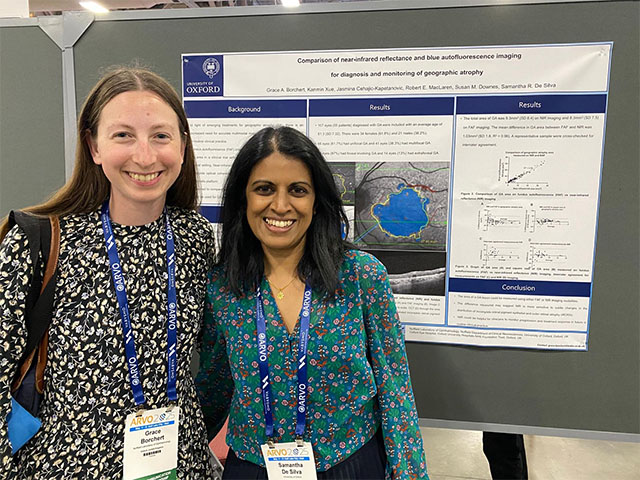
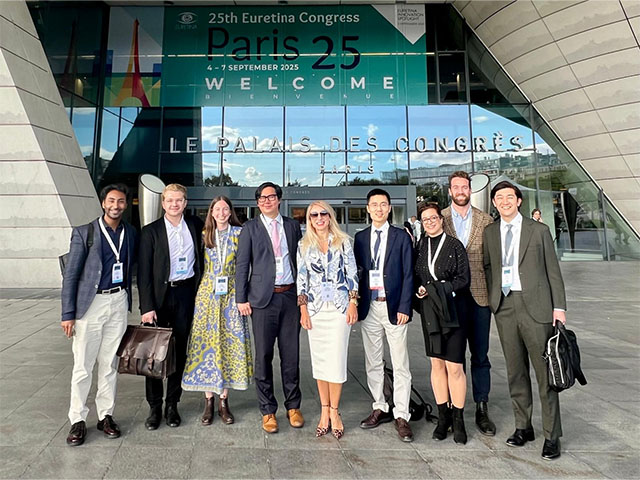
Alongside the mentorship I have received, Oxford has given me opportunities to share my work internationally through publications and conferences. Publishing papers has been most enjoyable because each manuscript has its own story, not only in what was written and published, but in the process of shaping the work through iteration, refining the approach, and collaborations that craft the final piece of work. I have presented research at the Association for Research in Vision and Ophthalmology, the world’s largest and leading conference for vision research, in New Orleans in 2023, Seattle in 2024 and Salt Lake City 2025. In 2025, I also presented at the European Society of Retina Specialists EURETINA conference in Paris and received Best Poster Prize at the EURETINA special focus meeting in Athens. These experiences have been instrumental in developing my communication skills as an emerging clinician-scientist.
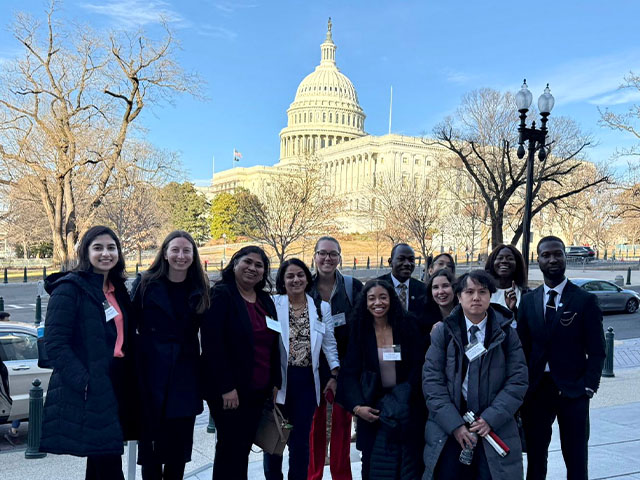
In 2024, I was part of the Association for Research in Vision and Ophthalmology Science Communication Training Fellowship which was also very helpful in conveying scientific ideas more clearly and engaging with different audiences. At the end of the fellowship, we represented the team at Congress in Washington DC for Advocacy Day in 2025 which was a highlight. I’m now part of the Members in Training Committee, a three year term, which will develop good insight into how research can influence policy and the wider scientific community.
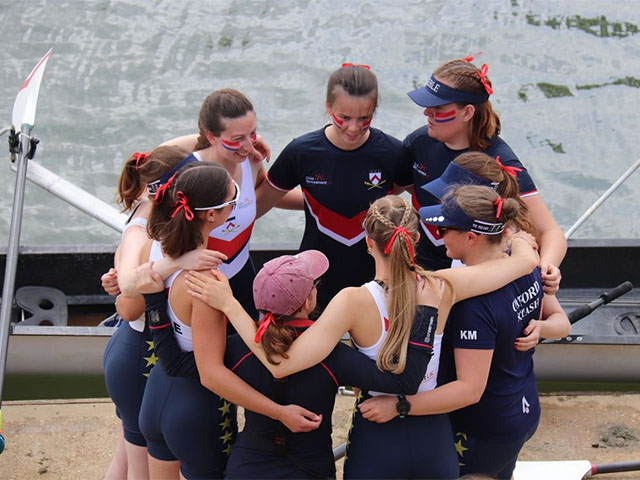

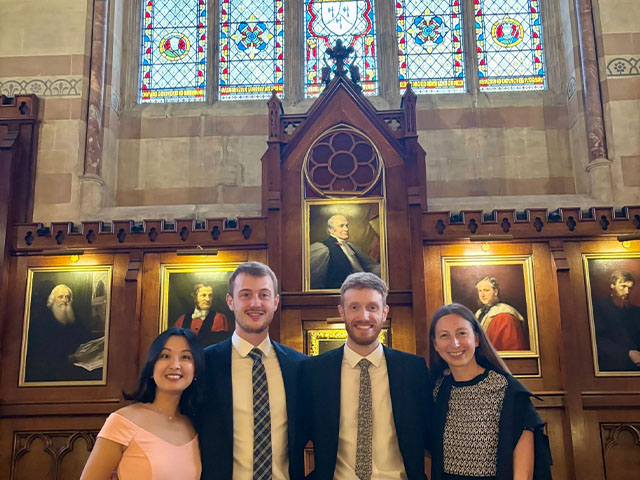
Beyond the lab and my clinical research endeavours, I have greatly enjoyed rowing with the Keble College Rowing Club. It has been a fantastic and supportive team, and across my three years at Oxford, we have celebrated four rowing blades at Torpids (2023) and Summer Eights (2023, 2024 and 2025), won blades at City Bumps 2025 and took first place in the open category at the Bedford Rowing Regatta 2023.
As for what’s next, there are many exciting plans on the horizon. I’ve been invited to return to meet with members of Congress in Washington DC in February as part of the Association for Research in Vision and Ophthalmology Advocacy Day 2026. I have submitted some research to present at Association for Research in Vision and Ophthalmology in Denver, Colorado. Additionally, throughout my DPhil, I have been working towards my General Medical Council registration in the UK and I am looking forward to contributing in a clinical capacity and being involved in clinic and clinical trials in the future.
In the coming years, I hope to undertake ophthalmology specialist training and become more involved in translational research. My long-term goal remains as it was when I started: to work as a clinician-scientist in ophthalmology, combining patient-centred care with research to advance treatment and improve outcomes. I’m so grateful for the experiences I have had, the guidance of incredible mentors near and far, and the support of the Ramsay Centre.
Interested in a Ramsay Postgraduate Scholarship? Our scholarships support young Australian leaders to study at the world’s best overseas universities and are valued at up to AUD$100,000 p.a.
Applications for 2026 will be open from 2 February to 23 March 2026. For more information visit: https://ramsaypostgradscholarship.com/
Media contact: Sarah Switzer 0407 816 098 / sarah.switzer@ramsaycentre.org