

With a student satisfaction rate over 95 per cent, three University Medallists, and philosophy at the University of Wollongong (UOW) recently ranked sixth in the world, the UOW Bachelor of Arts in Western Civilisation is delivering exceptional outcomes.
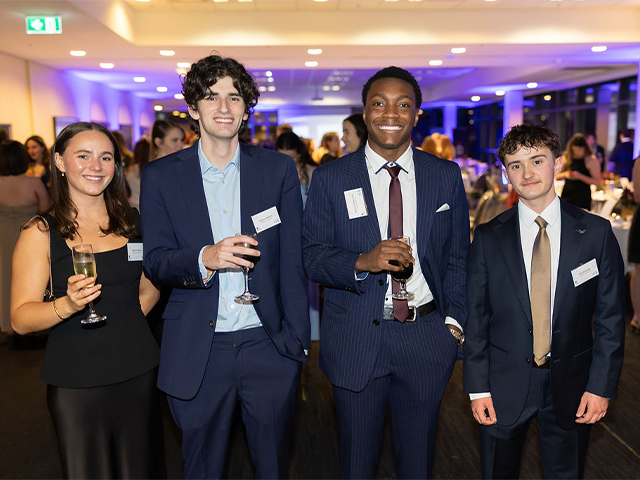
UOW and the Ramsay Centre for Western Civilisation marked these successes and reflected on the enduring impact of the Centre’s founder and benefactor Paul Ramsay’s generosity, at the program’s annual celebration dinner.
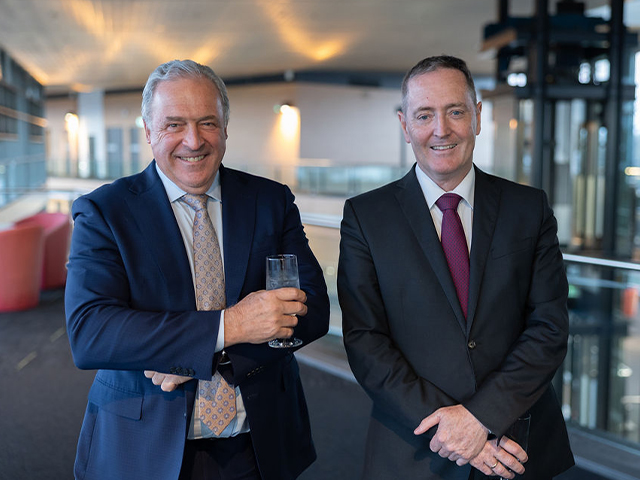
The dinner was attended by UOW Acting Chancellor Greg West, Provost Professor Ana Deletic, and the University’s new Executive Dean of the Faculty of Arts, Society and Business, Professor D’Maris Coffman. The Centre was represented by CEO Dr Martin Fahy, together with members of its Executive and Board.

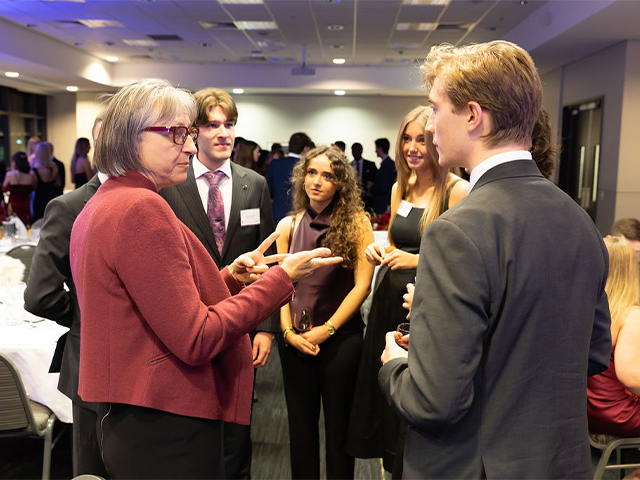
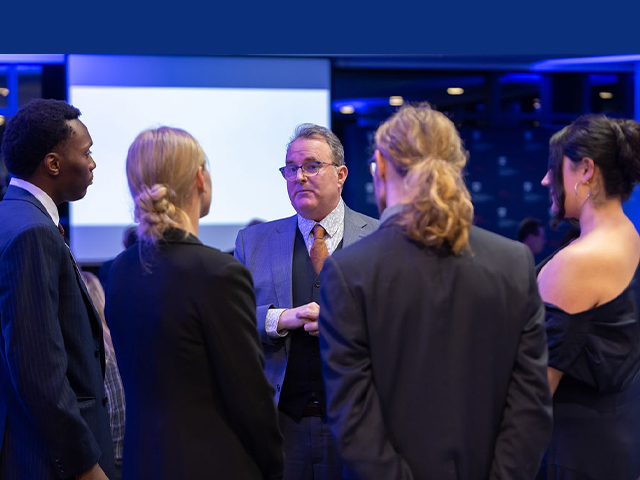
Delivered through UOW’s School of Liberal Arts, the Bachelor of Arts in Western Civilisation degree occupies a distinctive place in the Australian higher education landscape.
Established in 2019 through Paul Ramsay’s philanthropic support, the program combines small-group, discussion-based study of foundational texts and ideas from the Western intellectual tradition with engagement with non-Western perspectives. Students can apply for Ramsay Centre scholarships worth up to $32,000 per year.
Speaking at the event, internationally renowned philosopher and Head of the School of Liberal Arts, Chair Professor Daniel Hutto paid tribute to the late Paul Ramsay AO whose philanthropy made it possible to assemble exceptional scholars and teachers, develop an ambitious liberal arts curriculum, deliver small discussion-based classes and foster a rich intellectual culture for students.
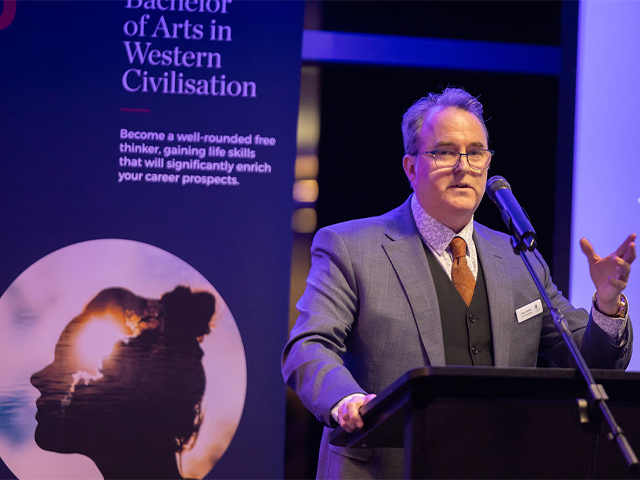
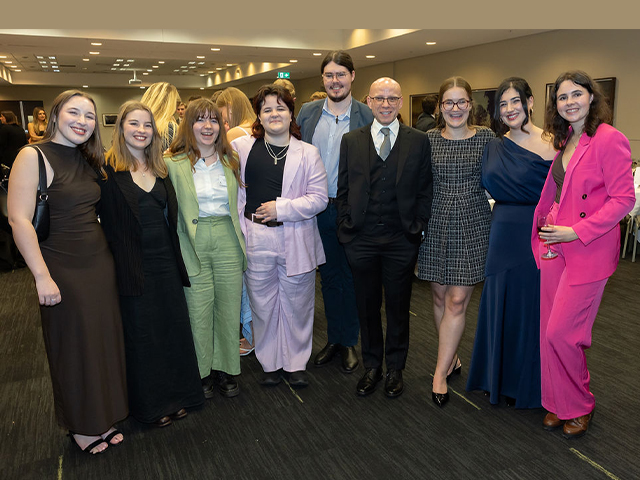
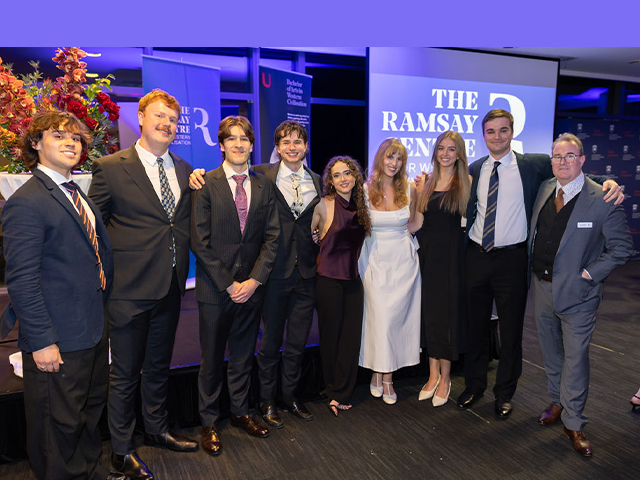
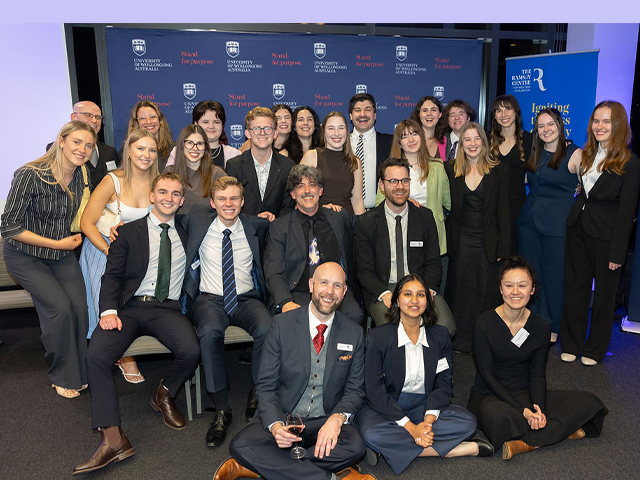
Professor Hutto highlighted UOW’s recent success in the QS World University Rankings by Subject, with philosophy ranked sixth globally, noting UOW now sits between Oxford and Cambridge in the rankings and achieved the highest citations-per-paper score among philosophy departments in the global top ten.
He said the partnership’s impact could also be seen in exceptional student outcomes, with the program producing three of UOW’s eight University Medallists in 2025 despite having a cohort of only around 165 students. Graduates are securing positions across government, law, defence and the public service, while also emerging as young leaders. One example is 2022 Scholar Joseph Brake, who has already been recognised as an AFR Top 100 Future Leader, a Mitsui Educational Foundation Scholar and a Westpac Australia-Asia Fellow. Alongside his studies, Joseph founded Lantern Consulting and the Asia-Australia Youth Association, reflecting the intellectual ambition, leadership and civic engagement the program seeks to foster.
Professor Hutto also spoke about an exciting new UOW initiative—the Applied AI and Human Futures major, launching in 2027. Its gateway subject, The Great Conversation: Human Intelligence and Wisdom in an Age of AI, will open the program’s philosophy-grounded liberal arts education to new student audiences
A current scholar and an alumna also spoke at the gathering.
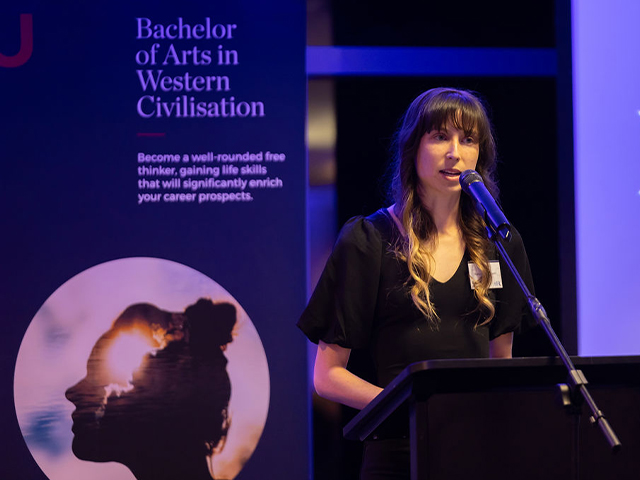
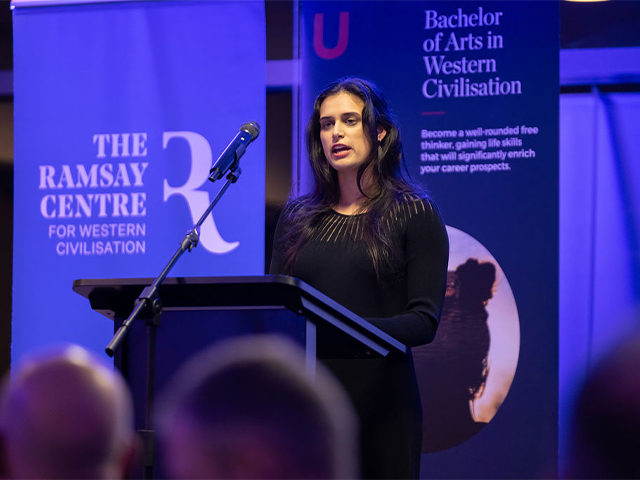

Fourth-year student Ruby Egan Brown told guests the program’s interdisciplinary approach had equipped her to grapple with emerging challenges including artificial intelligence, data privacy, intellectual property and international governance. She said these issues require creativity, critical thinking and thoughtful judgement about the values society should protect and promote.
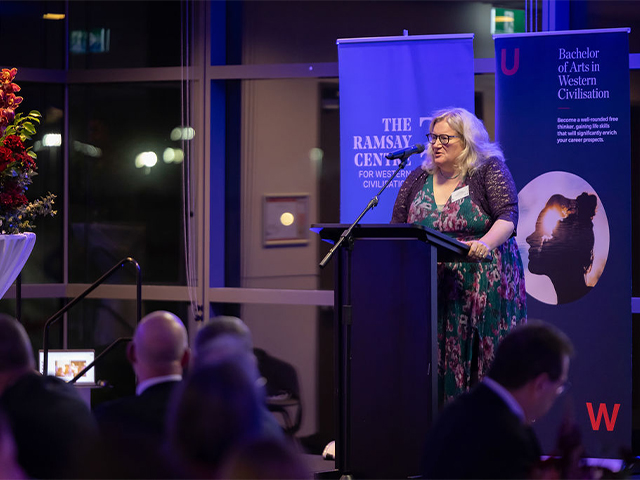
Alumna Shanti Pillai, now a solicitor in the criminal defence team at Karnib & Co. Lawyers, reflected on the program’s lasting impact on her professional and personal life. The first in her family to attend university, she said the degree opened opportunities she had never imagined possible and equipped her with skills she uses every day in legal practice. She credited the program with strengthening her ability to think critically about complex questions of justice, morality and human behaviour, while building her confidence as an advocate.
Newly-appointed Executive Dean of the Faculty of Arts, Society and Business, Professor D’Maris Coffman, said despite being new to the role, she had already been particularly impressed by the students and graduates she had met, describing them as articulate, reflective and deeply engaged with their communities. She noted that the program’s success had attracted international attention, including interest from Oxford academics in potential opportunities for student exchange and collaboration.
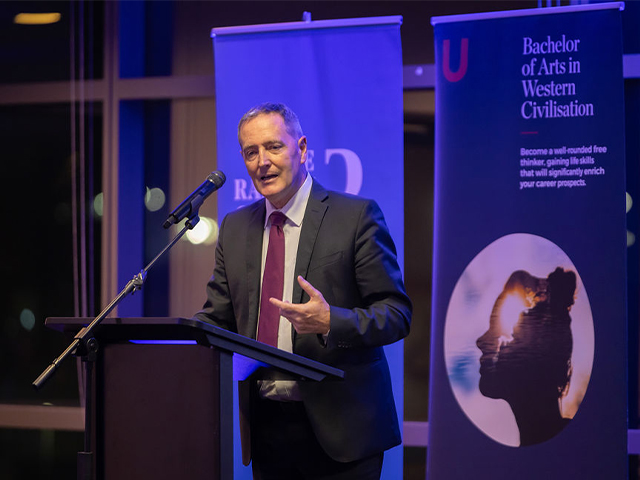

Ramsay Centre CEO Dr Martin Fahy said the success of the degree demonstrated how philanthropic investment in the humanities could produce graduates equipped to lead in an uncertain future, combining intellectual depth, adaptability and a commitment to public service. He noted that Ramsay Scholars were already contributing across fields including public policy, diplomacy, business, national security and the not-for-profit sector.
Dr Fahy said the rise of artificial intelligence had made the program’s emphasis on critical thinking, judgement, ethical reasoning and lifelong learning more important than ever.
“The higher-order skills our scholars develop, critical thinking, judgement, ethical reasoning and the capacity to keep learning, are exactly the qualities needed to thrive in a world being transformed by artificial intelligence,” Dr Fahy said. “As uncertainty increases, the value of this education only grows.”
Media contact: Sarah Switzer 0407 816 098/ sarah.switzer@ramsaycentre.org